
Even the most elegant apartment loses its luster when every threshold becomes an obstacle. The same is true when the bedroom gets too hot at night or a renovation promises dust and disruption. Discerning buyers are therefore taking a closer look. They no longer ask only about the view, the address, and the square footage. They want to know how a home can preserve energy efficiency, tranquility, and independence for decades to come.
This is exactly where Longevity Living comes in: as a blueprint for a long, self-determined life, not as a promise of eternal youth. The new concept of luxury is reflected in a healthy indoor climate, intelligent lighting, adaptable spaces, and pathways that will continue to function seamlessly tomorrow. A property thus becomes not a decorated status symbol, but the unobtrusive infrastructure of a good everyday life. This changes planning, design, and purchasing decisions alike.
Healthy living starts with air, light, and materials
Health cannot be defined by a single feature. It results from many subtle choices: low-emission surfaces, mineral-based plasters, wood certified as free of harmful substances, good acoustics, and a ventilation system that provides fresh air without drafts or disruptive noise. Natural materials impress not through their folkloric appeal, but through their texture, ability to age gracefully, and the sense of balance they bring to a space. The traceable origin of materials, as well as the careful selection of adhesives and sealants, are crucial.
Light also has an architectural impact long before a light fixture becomes a design object. In the morning, bright, cooler light can promote activity. In the evening, warm, indirect light sources create a calm atmosphere. External sunshades, strategically shaded glass surfaces, and intelligent temperature control keep spaces comfortable, especially in Munich’s densely built-up areas. Prevention here takes the form of forward-thinking planning: stress caused by heat, noise, or unnecessary barriers is reduced early on. Healthy living isn’t just a visible extra. It manifests itself in comfort, good usability, and an atmosphere that fosters both tranquility and concentration.
Aging in Place Provides Architectural Freedom
A home doesn’t have to look like an assisted-living facility to be usable in the long term. Good barrier-free architecture remains virtually invisible. Wide doorways, walk-in showers, terraces with minimal thresholds, slip-resistant surfaces, and generous spaces for movement ensure that neither the hallway nor the bathroom feels institutional. In multi-story villas or townhouses, an elevator quickly becomes a valuable addition. If it is factored in during the structural and utility planning phases, the need for later modifications can be significantly reduced.
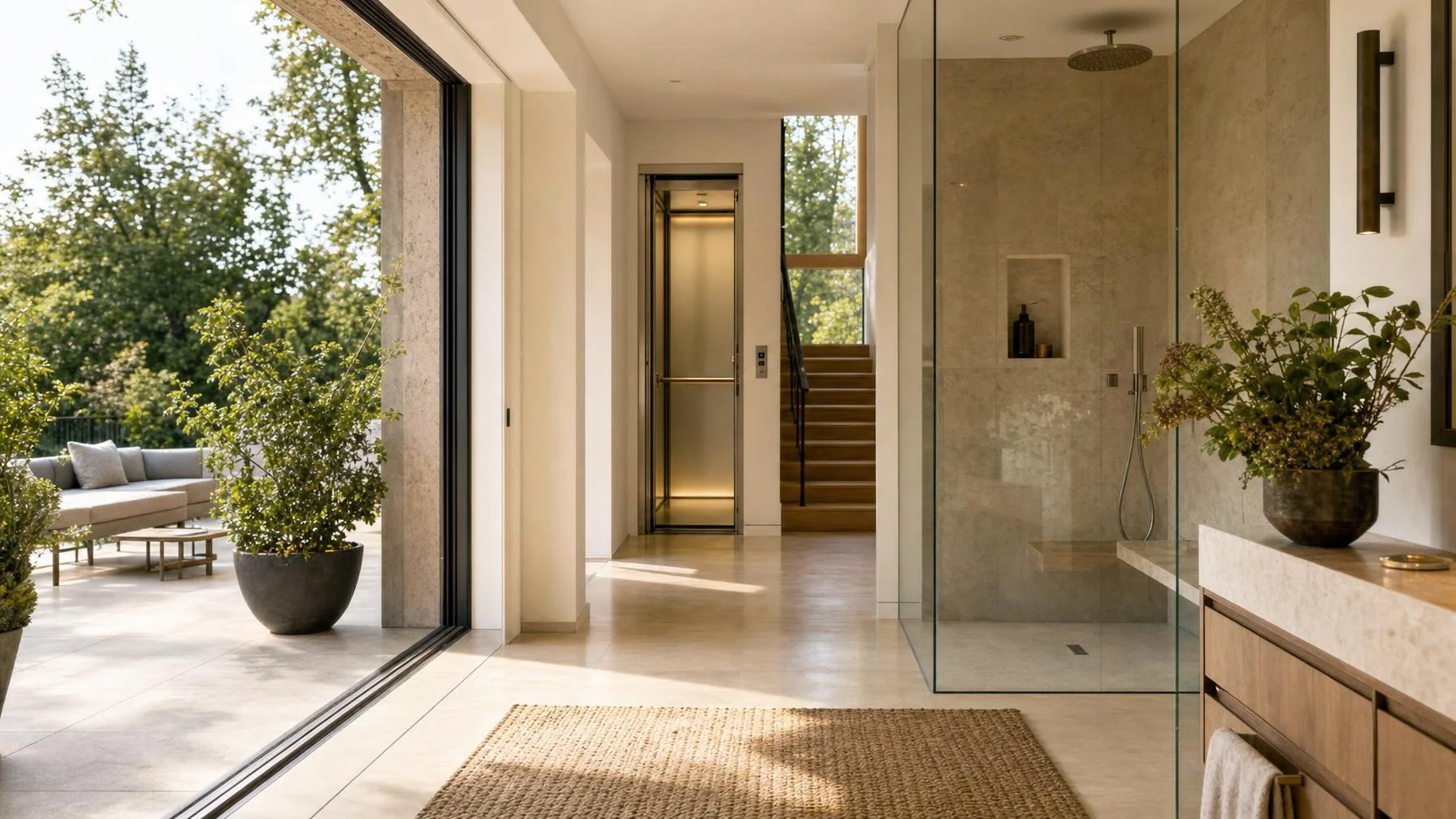
Aging in Place means more than just comfort in old age. The concept preserves the freedom to remain in familiar surroundings—even in the event of a temporary injury, when using a stroller, or when mobility changes. Handles, seating options, and assistive systems do not need to be immediately visible. Cleverly placed reinforcements and connections keep options open. Forward-thinking planning replaces compromises down the road. Accessibility thus becomes not a sign of sacrifice, but a precise form of autonomy.
Flexible floor plans anticipate changes
The traditional floor plan assigns a permanent function to each room. While this creates a clear layout, it quickly becomes rigid. A guest room stands empty, while there isn’t enough space in the work area. Later on, one of the parents might need a private retreat. Adaptable living spaces resolve this conflict with well-balanced proportions, the option for a second entrance, and installations that allow for new uses.
The following are particularly valuable:
- Rooms with natural light and good acoustics for working, living, or sleeping
- Bathrooms whose plumbing connections allow for future modifications without requiring complete demolition
- Separate areas for guests, caregiving, fitness, or intergenerational living
Smart home technology complements this flexibility by staying in the background. Scenes for lighting, shading, and temperature enhance comfort. Leak sensors, access systems, and controllable building technology can provide additional security. Open interfaces, manual control options, and a robust data protection strategy are crucial. No one wants to replace their home just because an app becomes obsolete. In successful Longevity Living, the architecture remains permanent, while technical components are renewable and easy to understand.
Wellness and nature are part of everyday life
A spa alone does not make for a healthy home. Wellness areas only realize their full value when they blend naturally into everyday life. A sauna near the bathroom, a compact workout room with natural light, or a quiet place for relaxation will be used more often than a spectacular but remote area in the basement. Here, quality follows the rhythm of life, not the brochure photo.
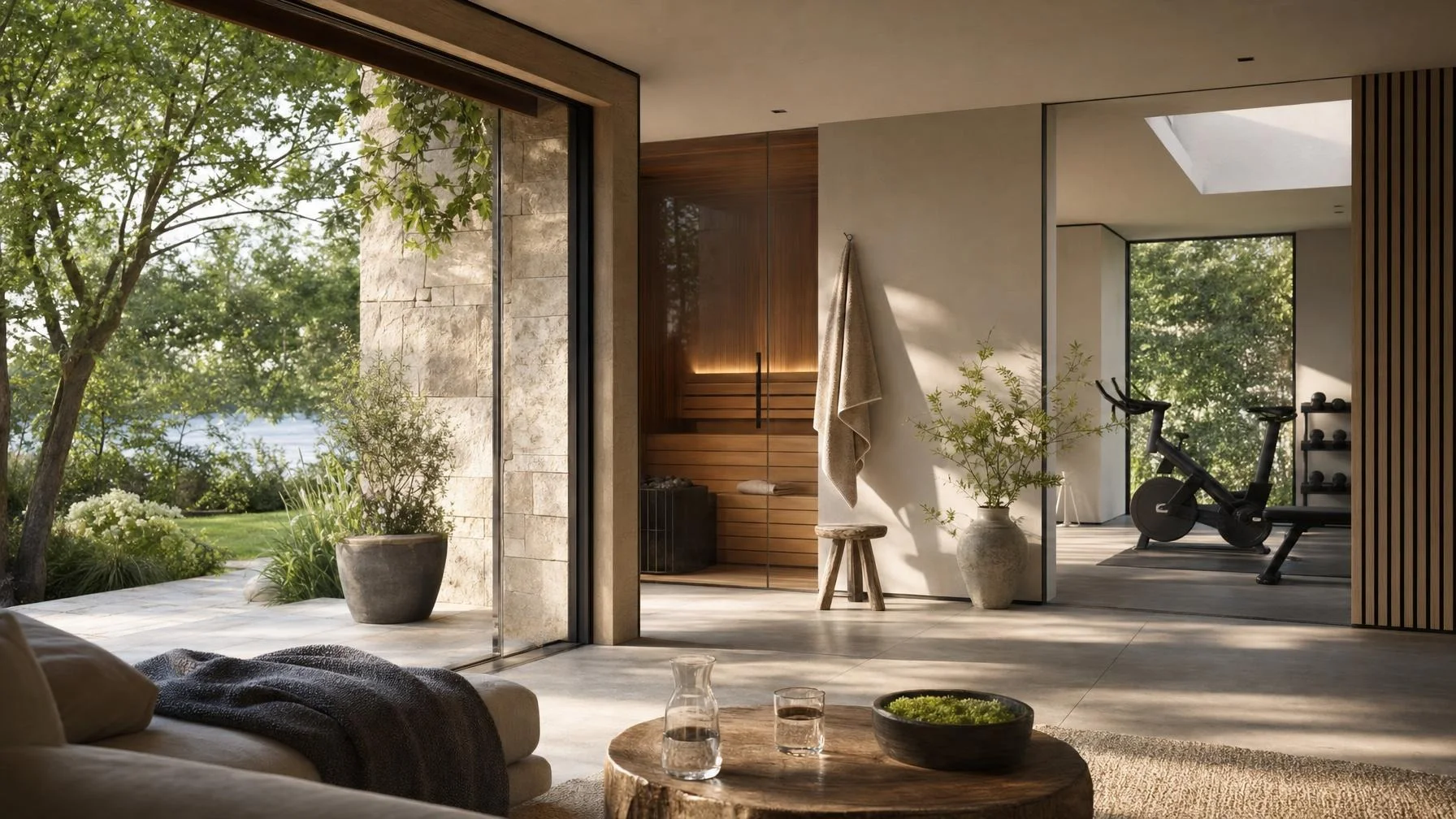
Likewise, proximity to nature shapes the quality of daily life. A view of old treetops, a wind-sheltered balcony, or direct access to the garden provide easy access to the outdoors. In Munich, this might be a green courtyard setting. In the surrounding area or on Lake Starnberg, it might be a property that combines scenic beauty with privacy. Good planning frames these qualities with deep window reveals, seasonal sun protection, and seamless transitions. Nature thus becomes part of the architecture, not merely its backdrop. Anyone considering a premium property should therefore do more than just count the rooms. Equally important is the question of what a typical Tuesday feels like there.
The new standard of luxury stands the test of time over decades
In the future, the most valuable feature of a home will not be the rarest material, but its ability to adapt gracefully to change. Longevity Living shifts the focus from the moment of prestige to long-term quality of life. Healthy materials, good air quality, adaptable floor plans, an elevator, and discreet technology do not constitute a rigid set of requirements. Together, they create a system that combines today’s comfort with future independence.
For private prospective buyers, therefore, a different kind of property tour is worthwhile. It’s not just the immediate impression that counts, but also the question of which decisions will still be convincing ten or twenty years from now. High-end properties in Munich, the surrounding area, and throughout Bavaria gain in value when their architecture already provides answers to these questions. Bayern Sotheby’s International Realty supports discerning buyers with market expertise, discretion, and an eye for these long-term values. After all, true luxury doesn’t have to be flashier. It must stand the test of time and naturally support a good life at every stage.